When should you translate your bilingual training content, and when should you redesign it? Translate your bilingual training content when the core message is universal, driven by standard compliance, and culturally neutral; redesign it when the content involves nuanced safety behaviors, requires specific cultural context, or targets a workforce with varying literacy levels. Treating a multilingual workforce as a straight one-to-one translation often results in flat, unrelatable training that fails to change behavior. By investing in a true cultural redesign, adapting visual avatars, adjusting tone, and formatting for literacy, organizations in manufacturing, agriculture, and warehousing can deploy multilingual eLearning that resonates and dramatically reduces safety incidents.
A common mistake risk and compliance leaders make is assuming language is the only barrier to learning. When rolling out a new forklift safety protocol or warehouse operational standard, L&D buyers often finalize an English master course and hand the script to a translation service. They then slap the resulting Spanish, French, or Tagalog audio over the same visuals, and consider the job done.
This approach creates a severe disconnect. A direct translation of corporate English often sounds overly formal, clinical, or even confusing to a native speaker. Furthermore, if the on-screen visuals, uniforms, equipment, environment, and characters don’t reflect that specific multilingual workforce, the training feels like an afterthought. In high-risk environments like agriculture or manufacturing, alienated employees are less likely to retain key safety information. To see how we build deeply localized safety ecosystems, explore our custom eLearning services.
Translation vs. Redesign: Understanding the Difference
To build effective bilingual training content, you must understand the distinction between changing the words and adapting the experience.
- Translation (Same Content, New Language): This is a literal conversion of text and audio. Pacing, visual assets, scenarios, and cultural assumptions remain identical to the first English version. It is fast and cheap, but highly rigid.
- Redesign (Cultural and Structural Adaptation): A redesign evaluates the target audience’s cultural context and literacy levels. It involves rewriting idioms into colloquial terms, replacing complex text with highly graphic storytelling (like comic book styles or whiteboard animations) for lower-literacy groups, and updating the on-screen avatars to reflect the actual demographics of the workers.
Case Study: The Wonderful Company’s Culturally Relevant Redesign
A clear example of redesign’s power over simple translation is our award-winning collaboration with The Wonderful Company. With a massive, diverse workforce, The Wonderful Company needed an inclusive safety eLearning solution that went beyond generic, translated videos.
When developing an immersive driver safety training series for their teams in Fiji, a straight translation of an American safety course would have completely missed the mark. Instead, the project underwent a full cultural redesign:
- Authentic Representation: We created animated avatars based on their actual employees and placed them in localized, recognizable settings rather than generic corporate backdrops.
- Voice and Tone: Because standard off-the-shelf voiceovers lack authenticity, we used advanced AI voiceover technology to replicate authentic Fijian voices, ensuring the translated training video sounded like a peer-to-peer conversation rather than a corporate mandate.
- Visual Literacy Adjustments: For wider food and beverage safety initiatives, we used highly detailed illustration and comic-book styles to break down complex procedures into simple visual steps that transcended language barriers.
This redesign strategy did more than check a compliance box; it earned a Brandon Hall award for Leadership and Development and delivered a genuinely inclusive safety culture. You can view examples of culturally adapted visual styles in our video production portfolio.
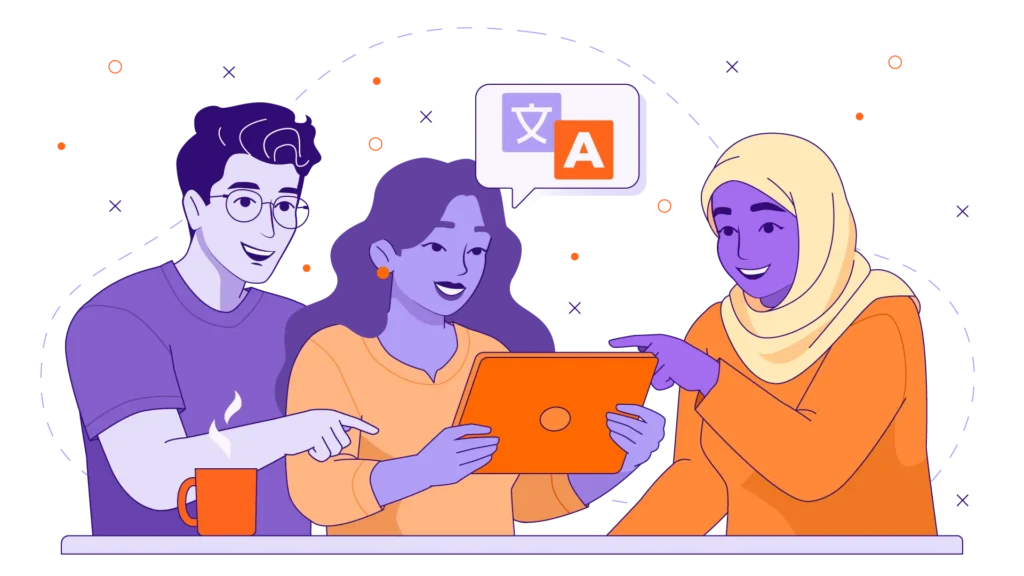
A Decision Guide: When to Translate vs. When to Redesign
How do you know when a simple translation will suffice and when a full redesign is worth the investment? Use this simple framework to guide your next multilingual project.
When Translation Alone is Enough
- Universal Compliance Topics: Basic, standardized topics like global cybersecurity awareness, standard GDPR rules, or general corporate code of behavior policies where the rules do not change based on location.
- High-Literacy Corporate Audiences: Software rollouts or management training for international office staff who are accustomed to standard corporate eLearning formats.
- Strict Regulatory Mandates: When a local government requires a specific legal document to be read verbatim in the native language, lacking any deviation.
When Redesign is Worth the Investment
- High-Risk Safety Training: If an employee misunderstanding a procedure could result in physical injury (e.g., manufacturing lockout-tagout, agricultural equipment operation, or warehouse driving safety).
- Varying Literacy Levels: If your workforce includes employees who may struggle with text-heavy screens in any language, you may need to shift to highly visual, audio-first microlearning.
- Cultural Nuance and Soft Skills: Training on peer-to-peer conflict resolution, management styles, or reporting harassment, where the cultural norms heavily dictate how scenarios should play out.
Empowering Your Multilingual Workforce
Your frontline employees are the backbone of your operations. Poorly translated, unrelatable training not only disrespects their daily reality but also introduces safety risks into your facilities. By discerning when to use a simple translation and when to invest in a culturally meaningful redesign, you ensure every worker receives the same standard of safety and care.
If your organization is struggling to reach a diverse workforce, it is time to move beyond standard translation. Ninja Tropic specializes in engineering multilingual eLearning that honors your employees’ cultural context while driving strict operational compliance. Contact our team via our Contact Page today to discuss how we can localize your most key safety initiatives.