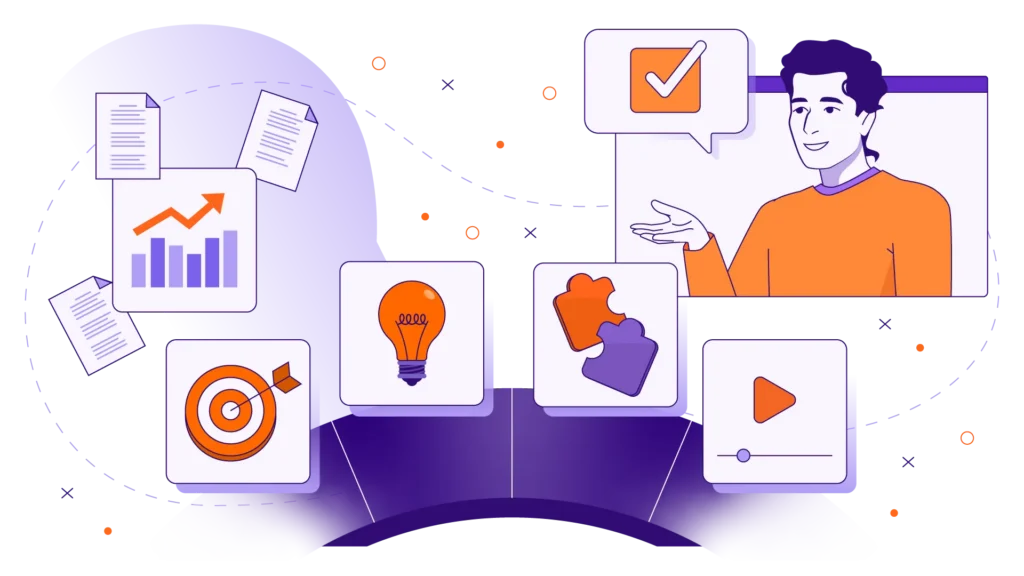
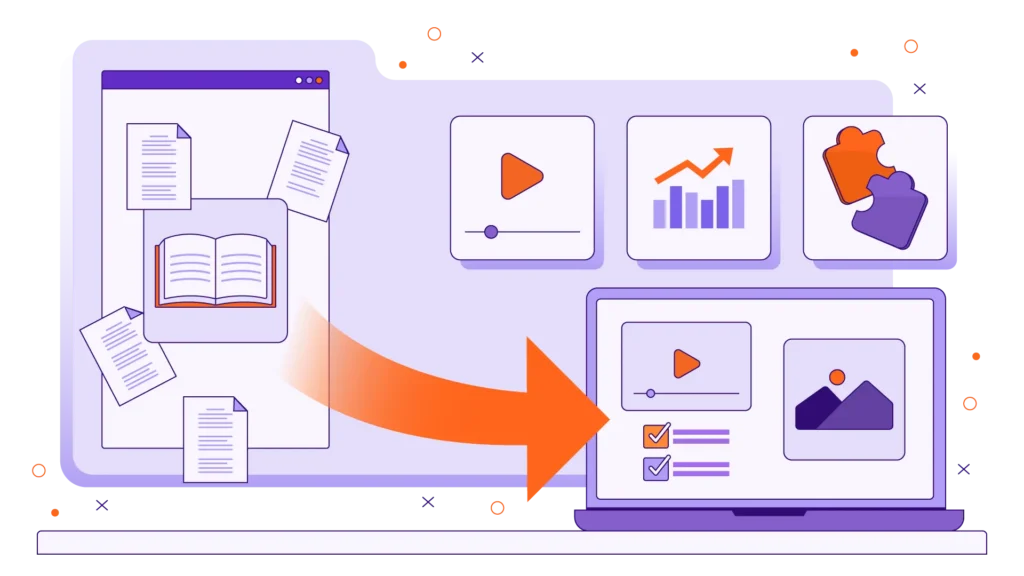
How do you use instructional design services to turn content into learning? To turn raw content into effective learning, organizations use instructional design services to systematically deconstruct dense manuals, slide decks, and SME knowledge into structured, behavior-driving educational assets. These services leverage learning experience design principles to reduce cognitive load and map business KPIs to specific, actionable learning objectives. By utilizing instructional design consulting services and expert training content development, L&D teams can transform passive information dumps into engaging, scenario-based microlearning that boosts knowledge retention and drives real-world performance.
We have all seen it happen: a company rolls out a new software system or compliance policy, and the “training” consists of emailing a 100-page PDF or forcing employees to watch a dry, two-hour webinar recording. The organization assumes that because the information was distributed, learning has occurred. Unfortunately, exposure to content does not equal skill acquisition.
Turning raw information into actual, behavior-changing learning requires a specialized process. It requires understanding adult learning theory, cognitive psychology, and multimedia production. If your internal L&D team is overwhelmed with administrative tasks or lacks this specialized engineering bandwidth, partnering with professional instructional design services is the ultimate solution. In this guide, we will explore how experts transform static documents into high-impact training ecosystems. To see how we structure learning journeys from the ground up, explore our custom eLearning services.
The Difference Between Raw Content and Learning Experience Design
The biggest mistake organizations make is confusing “information” with “instruction.”
Raw content is simply data. It is a technical manual, a product specification sheet, or a list of HR policies. It puts the entire burden of translation on the employee. Learning experience design (LXD), on the other hand, is the process of curating that content, stripping away the fluff, and designing an interactive, empathetic journey that guides the learner toward a specific behavioral outcome.
When you invest in instructional design services, you are paying to shift the heavy lifting from the learner to the designer. The designer ensures the content is broken down, visually supported, and immediately applicable to the employee’s daily workflow.

How Instructional Design Consulting Services Bridge the Gap
How exactly does a professional partner turn your messy Google Drive folders into a sleek corporate academy? It happens through a rigorous, multi-step engineering process.
1. Needs Analysis and KPI Alignment
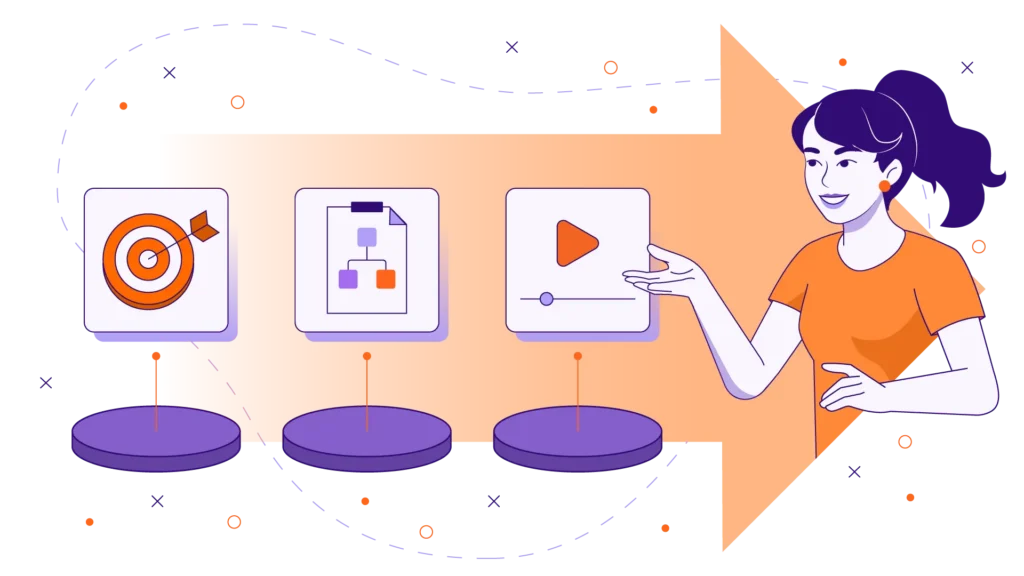
Before any content is built, instructional design consulting services start with strategy. Experts will interview your stakeholders and Subject Matter Experts (SMEs) to define the business problem. Are you trying to reduce safety errors? Speed up onboarding? Once the business KPI is established, the instructional designer works backward to define the exact behaviors needed to hit that goal, filtering out any content that doesn’t directly support it.
2. Cognitive Load Management and Storyboarding
Next, the raw content is deconstructed. Instructional designers are experts at chunking information into microlearning modules to prevent cognitive overload. They translate dense paragraphs into visual storyboards. Instead of a bulleted list of customer service rules, they script a realistic, scenario-based branching interaction. You can view examples of how complex topics are visualized in our video production portfolio.
3. Expert Training Content Development
Once the blueprint is approved, the training content development phase begins. This is where instructional theory meets multimedia production. The instructional design team develops high-fidelity screencasts, animated scenarios, interactive Articulate Storyline modules, and accessible knowledge checks. The final output is an engaging, SCORM-compliant asset ready for your Learning Management System (LMS).
When to Outsource to Instructional Design Services
Many organizations try to manage all training internally, but they eventually hit a ceiling. You should consider outsourcing to specialized partners when:
- Your SMEs are burned out: Your top performers are spending too much time trying to teach others instead of doing their actual jobs.
- You are launching a high-stakes initiative: If you are rolling out a global software system or overhauling your entire onboarding program, the cost of ineffective training is too high to risk a DIY approach.
- Your completion rates are high, but performance is low: This is the ultimate indicator that your current training is just “box-checking.” You need experts to redesign the assessments to measure actual competency.
Check out our association case studies to see how outsourcing curriculum design has resulted in massive ROI for complex organizations.
Transforming Your Corporate L&D Strategy
Your company’s knowledge is its most valuable asset, but that knowledge is useless if it is trapped in long-form documents and boring slide decks. By leveraging professional instructional design services, you can unlock that trapped value, scale your training efforts, and ensure your workforce actually retains the skills they need to succeed.
Ready to stop distributing content and start engineering real learning? At Ninja Tropic, our team of expert instructional designers and multimedia producers is ready to transform your raw materials into award-winning digital learning experiences. Reach out to us today via our Contact Page to schedule a consultation on your next major training initiative.
Frequently Asked Questions (FAQs)
What are instructional design services?
Instructional design services involve the systematic process of analyzing learning needs and goals, and then developing a customized, structured educational delivery system to meet those needs. It includes everything from curriculum mapping and scriptwriting to interactive media production and LMS integration.
How does learning experience design differ from traditional training?
Traditional training often focuses on the trainer and the content, typically resulting in one-way lectures or dense reading assignments. Learning experience design (LXD) is learner-centric; it focuses on the user’s cognitive journey, utilizing empathy, interactive multimedia, and user experience (UX) principles to make the acquisition of knowledge intuitive and highly engaging.
What is involved in training content development?
Training content development is the execution phase of instructional design. It involves taking approved storyboards and scripts and producing the final learning assets. This includes recording voiceovers, designing animations, filming live-action video, programming interactive quizzes, and packaging the final SCORM/xAPI files for deployment.